
Latest FIA Penalty News: Multiple Sanctions Rock Hungarian Grand Prix as Stewarding Scrutiny Continues
The Fédération Internationale de l’Automobile (FIA) delivered a flurry of penalties during and after the 2026 Hungarian Grand Prix at the Hungaroring, underscoring ongoing debates over consistency, mitigating factors, and the evolving approach to sporting sanctions in Formula 1. With the championship heading into the summer break, the decisions involving Lewis Hamilton, Kimi Antonelli, Carlos Sainz, and Oliver Bearman have drawn significant attention from teams, drivers, and former officials.
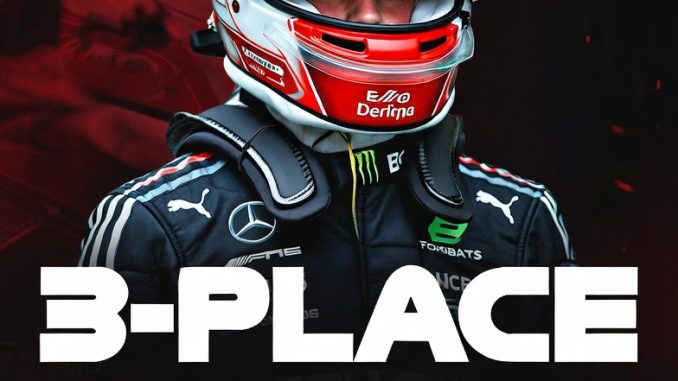
Lewis Hamilton endured another difficult weekend with the stewards. In qualifying, the Ferrari driver received a three-place grid penalty for impeding Oscar Piastri during the final runs of Q3. Hamilton had provisionally qualified second behind polesitter Lando Norris, but the sanction dropped him to fifth on the grid. Stewards determined that Car 44 unnecessarily impeded Car 81, forcing Piastri to take avoiding action and abort his lap. Hamilton later explained that Ferrari informed him late of the approaching McLaren, and the positioning of his car limited visibility in his mirrors. The penalty promoted Charles Leclerc to the front row.
During the race itself, Hamilton collected a further five-second time penalty for exceeding the pit-lane speed limit by just 0.1 km/h. The infringement occurred during a late pit stop under Virtual Safety Car conditions. Combined with other factors, it left the seven-time world champion classified fifth. Hamilton admitted to “lots of mistakes” across recent races while questioning Ferrari’s strategic call for a third stop, which he felt opened the door to the speeding offence. This marked another costly sanction in a sequence of recent weekends for the Ferrari star.
Championship leader Kimi Antonelli of Mercedes also faced multiple sanctions after qualifying. The young Italian received a three-place grid drop, one penalty point, and a warning following investigations into two separate incidents. The primary offence involved failing to slow sufficiently under yellow flags after Max Verstappen spun at the final corner in Q3. Telemetry showed Antonelli lifted off the throttle, but stewards judged the reduction in speed too brief and insufficient. The standard guideline penalty of five grid places was reduced to three in recognition of the limited reaction time and the attempt to slow. The additional penalty point brought Antonelli to four on his super licence, matching Haas’s Oliver Bearman at the top of the current tally. Antonelli recovered strongly in the race to finish third, limiting the damage to his championship lead.
Carlos Sainz of Williams was handed a five-second time penalty for causing a collision with Oscar Piastri while being lapped. Stewards ruled Sainz wholly responsible, yet applied a reduced sanction rather than the standard 10-second penalty. They cited a mitigating factor: limited visibility of Piastri’s car due to the relative positioning on the circuit at the moment of the attempted overtake, even though Sainz had been informed the McLaren was approaching. Former Haas team principal Guenther Steiner later criticised the leniency on a podcast, arguing that the standard harsher penalty should have been applied to set a clearer precedent for backmarkers, regardless of any software or GPS issues that may have affected blue-flag systems. Steiner noted that the outcome would not have changed Sainz’s position at the rear of the field but emphasised the need for consistency.
Oliver Bearman received a five-second penalty for ignoring blue flags while being lapped by Isack Hadjar. The Haas driver failed to yield after multiple signals, dropping him further down the classification. Additional minor sanctions included a €400 fine for Red Bull after Isack Hadjar exceeded the pit-lane speed limit in FP1 by 3.8 km/h.
These Hungarian decisions arrive against a broader backdrop of revised 2026 FIA penalty guidelines that give stewards greater flexibility on super-licence penalty points. Drivers have collected far fewer points this season than in previous years, with the system now allowing stewards to award anywhere from zero up to the previous guideline maximum depending on severity. Collisions, forcing another car off-track (unless reckless), and certain flag infringements no longer automatically attract the higher points totals of earlier seasons. Franco Colapinto received one of the few points issued early in the year for insufficient slowing under yellow flags. After Hungary, Bearman and Antonelli lead with four points each, followed by Hamilton, Alex Albon, and Lance Stroll on three.
Separately, McLaren and Red Bull have lodged appeals with the FIA International Court of Appeal against the decision to rescind Pierre Gasly’s Monaco Grand Prix pit-lane speeding penalties. Alpine successfully argued a measurement discrepancy of 77 cm in the timing loops, leading stewards to conclude Gasly had not exceeded the limit. The appeal process continues to influence championship points calculations from earlier in the season.
Drivers and the FIA held discussions around the Hungarian weekend covering recent stewarding calls, including controversial incidents from the Belgian Grand Prix involving Hamilton and Leclerc. Reports indicated stewards acknowledged that a similar Leclerc–Piastri clash in future would likely attract a penalty. The revised guidelines and improved dialogue between the FIA and the drivers’ group described by some as the strongest relations since the Charlie Whiting era have contributed to a more measured application of points while sporting time and grid penalties remain firmly in use.
As Formula 1 prepares for the Dutch Grand Prix later in August, the Hungarian sanctions highlight the fine margins of modern stewarding. Mitigating circumstances, telemetry data, and visibility assessments continue to shape outcomes, while the reduced emphasis on automatic penalty points aims to reserve the most severe licence consequences for clearly reckless or deliberate actions. Teams and drivers will watch closely to see whether the current approach delivers greater consistency across the remaining races of the 2026 season.
Discover more from F1 Paddock Updates
Subscribe to get the latest posts sent to your email.
Be the first to comment