
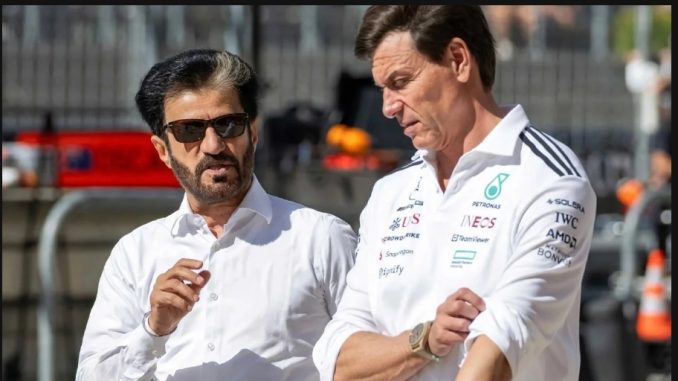
Toto Wolff Backs FIA’s Plan for F1 V8 Engine Return in 2030
August 27, 2026
Formula 1 could be heading toward one of the biggest changes of the modern era, with Mercedes team principal Toto Wolff backing discussions over a potential return to V8 engines from 2030 or 2031.
Wolff’s support for the proposed regulations comes as the FIA continues to examine what Formula 1’s next-generation power units should look like beyond the current 2026 regulations. Rather than simply bringing back the engines of the past, the proposed concept would combine the character and sound of a V8 with modern sustainable fuel technology and a simplified hybrid system.
The possibility has already generated significant excitement among F1 fans, many of whom have long complained that the current turbo-hybrid era lacks the distinctive sound associated with previous generations of Formula 1 machinery.
FIA Pushes for a New V8 Era
FIA President Mohammed Ben Sulayem has been increasingly vocal about the possibility of introducing a V8-based power unit for the next major regulatory cycle.
The current target is reportedly 2031 at the latest, although a 2030 introduction could become possible if sufficient agreement is reached among the manufacturers.
The proposed philosophy is considerably different from the 2026 power units. Formula 1’s current engines feature a much larger electrical contribution, while the next-generation concept being discussed would put significantly greater emphasis on the internal combustion engine.
A possible configuration could involve a 2.5-litre to 3.0-litre V8 running on 100 percent sustainable fuel, with a smaller electrical contribution. Depending on the final regulations, total output could approach or even exceed 1,000 horsepower.
That would represent a major shift in philosophy without abandoning Formula 1’s sustainability objectives.
Wolff Wants the Sound Back
Wolff’s position is particularly significant because Mercedes was one of the dominant manufacturers throughout the V6 turbo-hybrid era.
The Austrian has previously described himself as something of a Formula 1 purist and has acknowledged the importance of the emotional experience created by the sport’s engines.
His criticism of certain aspects of the 2026 generation has also attracted attention. In particular, Wolff has compared the high-pitched sound produced by the new cars during certain procedures to a fire alarm.
While the comment was partly humorous, it reflected a much broader discussion about the identity of modern Formula 1.
For decades, the sound of a Formula 1 engine was an essential part of the spectacle. The screaming V10s of the early 2000s and the later naturally aspirated V8s became synonymous with the sport.
The turbo-hybrid revolution changed that dramatically.
The engines became extraordinarily efficient and technologically advanced, but the deep, aggressive sound of the previous generations disappeared.
A return to a V8 could therefore be about more than engineering.
It could also be an attempt to restore some of Formula 1’s emotional identity.
A Modern V8 Would Not Be a Return to the Past
Despite the excitement surrounding the idea, the proposed engine would not simply be a recreation of the V8s used between 2006 and 2013.
Those engines were 2.4-litre naturally aspirated units that could rev beyond 18,000rpm and produce roughly 750 to 800 horsepower.
The future concept would be designed around modern requirements.
Sustainable fuel would remain central to the project, allowing Formula 1 to continue pursuing its environmental objectives while reducing reliance on an extremely complicated hybrid architecture.
The electrical system would also be considerably simpler than the current arrangement.
One possible approach would see combustion power account for approximately 80 percent of total output, with electrical assistance providing the remaining 20 percent.
Such a system could potentially deliver close to 1,000 horsepower while allowing engineers to reduce the weight and complexity of the overall power unit.
Cost Is a Major Factor
Financial considerations are another major reason why manufacturers are interested in simplifying future power units.
The development of modern hybrid engines requires enormous investment in areas including battery technology, electrical systems, software, energy recovery and internal combustion development.
A simpler V8 architecture could significantly reduce those costs.
The FIA has been examining ways to make future power units considerably cheaper to manufacture and develop, with targets that could bring the cost per unit down substantially compared with current figures.
For manufacturers, that could make continued participation in Formula 1 easier to justify.
Mercedes, Ferrari, Honda, Audi, Red Bull Powertrains and Cadillac all have different technical and commercial priorities, but none wants to enter a regulatory cycle that demands unlimited spending.
A lower-cost engine could therefore help Formula 1 maintain its current manufacturer presence while making the championship more attractive to potential future entrants.
The 2026 Rules Will Still Matter
The proposed V8 future does not mean Mercedes or the other manufacturers are abandoning the 2026 regulations.
The current generation represents one of the biggest technical changes in Formula 1 history.
The new power units use a much greater electrical contribution, remove the MGU-H and rely on fully sustainable fuel. The regulations were designed to increase electrical performance while maintaining a highly competitive internal combustion component.
Teams are still learning how to extract maximum performance from the new technology.
However, the lessons from this generation could ultimately influence the design of the next one.
The FIA now has an opportunity to determine which aspects of the current system genuinely improve racing and which add complexity without providing sufficient sporting value.
The Battle Over Hybrid Power
One of the biggest unresolved questions is exactly how much electrical assistance the future V8 should have.
Ben Sulayem has spoken about a relatively minor hybrid contribution, prioritising the combustion engine and reducing complexity.
Wolff, however, has also discussed more ambitious possibilities in which electrical power remains a substantial component of the overall performance package.
That disagreement could become one of the most important issues in the negotiations.
A smaller hybrid system would produce a more traditional driving experience, while a larger electrical contribution could keep Formula 1 closely connected to the automotive industry’s continuing investment in electrification.
The final regulations will probably represent a compromise between those two philosophies.
Lighter Cars Could Transform the Racing
Engine regulations are also closely connected to the weight of the car.
One of the potential benefits of a simpler power unit would be a reduction in overall vehicle weight.
The FIA is examining concepts that could eventually bring Formula 1 cars toward the 630kg to 650kg region, although the final figure will depend on the complete technical package.
Lighter cars would have significant sporting benefits.
They could accelerate more aggressively, change direction more quickly and potentially produce better racing on circuits where current-generation cars struggle with their size and mass.
Reduced weight could also benefit tyre management and make street circuits more challenging for drivers.
What Happens Next?
The road toward 2030 or 2031 is still long.
The FIA will need to work with Formula 1 management, the existing manufacturers and other stakeholders before the technical regulations are finalised.
Questions surrounding engine displacement, turbocharging, hybrid power, fuel flow, rev limits, energy recovery and cost controls will all need to be resolved.
The governance process will also be crucial.
If enough manufacturers support an earlier introduction, the V8 regulations could potentially arrive in 2030. Otherwise, the change could be delayed until 2031.
For Wolff, however, the direction of travel appears increasingly clear.
Formula 1 does not necessarily need to choose between sustainability and spectacle.
A future V8 running on sustainable fuel could potentially offer both.
The prospect of hearing a high-revving V8 scream around circuits such as Monza, Silverstone and Spa once again has already captured the imagination of fans.
If the FIA and manufacturers can agree on the technical details, Formula 1 may be preparing for a remarkable new chapter — one that combines the unmistakable character of the past with the sustainability and efficiency demanded by the future.
The V8 roar may not be coming back exactly as fans remember it. But if Toto Wolff and the FIA get their way, Formula 1 could once again sound like Formula 1.
Discover more from F1 Paddock Updates
Subscribe to get the latest posts sent to your email.



Be the first to comment