
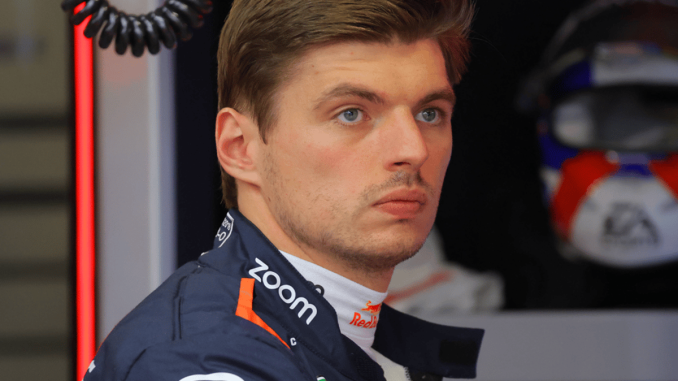
Just In: FIA confirms decision on Macarena wing ban after scary Max Verstappen crashes
Formula 1 fans have been given an important update after the FIA confirmed its position on the controversial “Macarena” rear wing following two frightening incidents involving Max Verstappen. The innovative aerodynamic design had come under increased scrutiny after Red Bull temporarily stopped using its version following Verstappen’s high-speed crashes. However, the governing body has now made it clear that it does not intend to introduce a blanket ban on the concept.
The Macarena wing has become one of the most talked-about technical developments of the 2026 season. The design involves a rotating rear-wing element that can alter its position during a lap, helping teams manage aerodynamic performance and reduce drag. Ferrari and Red Bull have been the two teams using the concept during races, making it a particularly interesting area of technical competition.
Attention increased dramatically after Verstappen suffered two high-speed incidents. Red Bull subsequently paused its use of the wing while the team investigated the circumstances surrounding the crashes. The FIA also requested technical information from Red Bull and Ferrari so that officials could better understand how the systems operated and whether there were any safety concerns.
The FIA’s single-seater director, Nikolas Tombazis, has now explained that the governing body was particularly interested in ensuring that the mechanism could not remain in an unsafe position. Officials wanted to establish that the wing would reliably return to its required position and that a potential hydraulic failure would not leave it stuck open. They also examined how quickly the wing moved, because an unusually slow movement could potentially affect the car’s stability.
Following those discussions and its review of the available information, the FIA has decided that there is currently no reason to prohibit the Macarena wing. The decision means teams using the design can continue developing and running it, provided their systems remain compliant with the technical and safety requirements of Formula 1.
Importantly, the FIA also clarified that Red Bull’s decision to stop using its version was not the result of an official ban. Instead, the team chose to carry out additional work after discussions about the safety of its design. That distinction is significant because it shows that the governing body was concerned about ensuring the system was safe rather than automatically declaring the entire concept illegal.
For Red Bull, the situation will be closely watched as the team prepares for the Dutch Grand Prix. Verstappen’s incidents have naturally increased attention on the car, while the team’s engineers will want to make sure that any aerodynamic development provides performance without compromising reliability or driver safety.
The FIA’s decision also represents an important moment in the technical battle between the leading teams. Innovative aerodynamic solutions are becoming increasingly valuable under the 2026 regulations, and teams are constantly searching for ways to gain even the smallest performance advantage.
While the Macarena wing has attracted plenty of criticism and speculation, the FIA’s latest assessment provides some clarity. The design itself has not been banned, although teams remain responsible for ensuring that their individual systems operate safely and within the regulations.
For Verstappen and Red Bull, the priority will now be proving that their solution can deliver the desired performance while giving the driver confidence behind the wheel. After the frightening crashes, that balance between speed and safety will be more important than ever.
As the 2026 season continues, the Macarena wing is likely to remain a major talking point in the technical battle. The FIA’s decision means the controversy is not ending with a ban—but instead, the focus will shift towards how teams continue to develop the technology and demonstrate that it can be used safely.
Discover more from F1 Paddock Updates
Subscribe to get the latest posts sent to your email.


Be the first to comment