
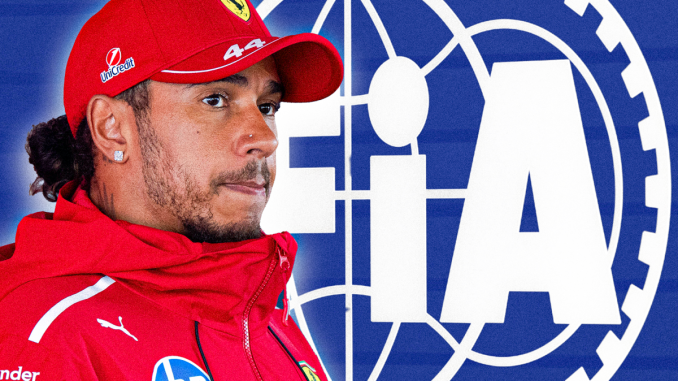
FIA Fires Back at Lewis Hamilton as….see details
The FIA has defended the much-debated 2026 Formula 1 regulations after growing criticism from several leading drivers, including Lewis Hamilton and Max Verstappen. The governing body insists it was willing to make changes sooner, but claims that Formula 1’s power unit manufacturers were unable to agree on proposed revisions before the season began.
The introduction of the new technical regulations has been one of the biggest talking points of the 2026 campaign. The rules introduced a completely redesigned chassis and power unit package, placing a much greater emphasis on electrical energy alongside the traditional internal combustion engine. While intended to improve efficiency and sustainability, the changes have drawn widespread criticism from drivers and fans alike.
Concerns first emerged during pre-season testing. Reigning world champion Max Verstappen compared the new cars to “Formula E on steroids,” expressing frustration over the way the cars delivered power. Lewis Hamilton also questioned the complexity of the new regulations, joking that drivers almost needed a university degree to fully understand how the systems worked.
As the season progressed, those concerns only intensified. Several races exposed problems with energy deployment, particularly on circuits featuring long straights and high-speed sections. Drivers complained that they were forced to manage battery usage excessively instead of racing flat out, affecting the quality of competition.
In response, Formula 1 and the FIA introduced emergency energy management adjustments beginning with the Miami Grand Prix in May. The changes were designed to improve racing while longer-term solutions were explored.
A month later, the FIA revealed a broader plan aimed at rebalancing the relationship between the internal combustion engine and the electrical recovery system. Under the proposal, the engine contribution will gradually move toward a 60/40 split by the 2028 season, with phased adjustments taking place throughout 2027 and 2028.
Despite those planned improvements, criticism has continued. The issue became particularly noticeable at traditional circuits such as Spa-Francorchamps before the summer break, where drivers once again struggled with energy management during high-speed sections of the track.
Former Formula 1 driver and Sky Sports F1 commentator Martin Brundle expressed disappointment, arguing that some of the sport’s greatest corners had effectively lost their challenge because drivers were forced to conserve energy instead of attacking at full speed.
Grand Prix Drivers’ Association director Carlos Sainz also questioned how the regulations were approved in the first place. He suggested that those responsible for reviewing the original simulations in 2022 and 2023 should reconsider the decisions that led to the current situation, saying the problems should have been identified long before the rules were introduced.
Hamilton agreed with Sainz’s assessment and delivered one of the strongest criticisms yet, remarking that whoever approved the regulations still appeared to be in charge despite the ongoing issues.
However, FIA Single-Seater Director Nikolas Tombazis has now defended the governing body. He acknowledged that satisfying every driver would always be difficult but explained that the FIA had explored making earlier changes. According to Tombazis, meaningful revisions required agreement from Formula 1’s power unit manufacturers, and that consensus could not be reached before the regulations came into force.
The FIA maintains that it remains committed to improving the current package and believes the planned engine balance changes over the next two seasons will help address many of the concerns raised by drivers while preserving the long-term goals of the 2026 regulations.
Discover more from F1 Paddock Updates
Subscribe to get the latest posts sent to your email.
Be the first to comment