
Lewis Hamilton at the Center of Ferrari’s Bold Zandvoort Gamble as New Rear Wing Design Sparks Int..read more
Ferrari has taken another intriguing step in its ongoing development race, drawing attention across the Formula 1 paddock as it tests a revised rear wing configuration at the Dutch Grand Prix in Zandvoort. At the heart of this technical experiment is none other than Lewis Hamilton, whose involvement in trialling the setup has added an extra layer of interest to the Scuderia’s evolving aerodynamic approach.
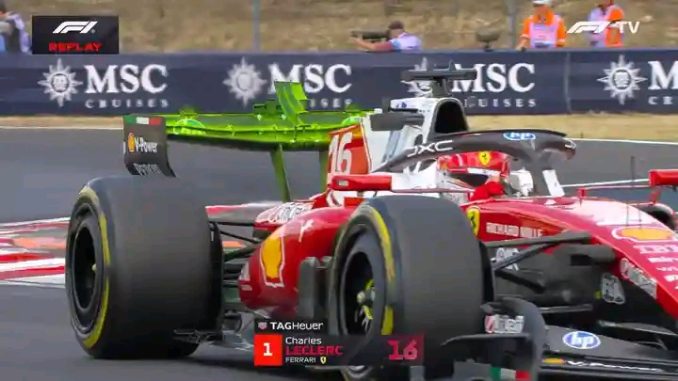
Reports indicate that Ferrari arrived at Zandvoort with an updated rear wing design that was first introduced during the Hungarian Grand Prix weekend. However, this is not a simple carryover. The team has made a notable adjustment by removing the central cascade of winglets—an element that had previously been part of the package. This subtle yet potentially significant change is aimed at refining the car’s aerodynamic behavior, particularly in relation to airflow efficiency and overall balance.
During the opening practice session (FP1), Lewis Hamilton was given the opportunity to test this modified configuration. His early laps with the revised rear wing offered Ferrari valuable initial data on how the car responds under Zandvoort’s unique circuit characteristics, which demand a delicate balance between downforce and straight-line speed. However, Hamilton later switched back to the version that includes the central cascade of winglets—a specification that teammate Charles Leclerc ultimately retained.
This back-and-forth between two different rear wing configurations highlights Ferrari’s strategic approach to data gathering. By running multiple setups within the same session, the team is effectively conducting a real-time comparison, allowing engineers to better understand how each design performs under identical track conditions. Such an approach is crucial at a circuit like Zandvoort, where high-speed corners and constant elevation changes place heavy demands on aerodynamic stability.
The removal of the central cascade of winglets is believed to influence how airflow is directed across the rear of the car. Without these elements, the airflow may become cleaner, potentially reducing drag and improving straight-line performance. On the other hand, the original configuration with the winglets could provide additional downforce and stability, particularly in the more technical sections of the track. Determining the optimal balance between these factors is key to unlocking performance gains.
Hamilton’s role in testing both setups underscores his importance not just as a driver, but also as a critical contributor to car development. His feedback, combined with telemetry data, will help Ferrari decide which configuration offers the best compromise for both qualifying pace and race consistency.
As the weekend progresses, all eyes will be on Ferrari to see which rear wing specification they ultimately commit to. The decision could have a meaningful impact on their competitiveness, especially as the battle for positions intensifies. With Hamilton involved in the evaluation process and Leclerc providing a point of comparison, Ferrari appears well-equipped to make an informed choice.
In a season where marginal gains can make a decisive difference, Ferrari’s willingness to experiment demonstrates its determination to stay competitive. The Zandvoort test may seem like a small tweak on the surface, but in Formula 1, even the slightest aerodynamic adjustment can shape the outcome of a race weekend.
Discover more from F1 Paddock Updates
Subscribe to get the latest posts sent to your email.



Be the first to comment